Strengthening intercultural understanding, peace and stability in Europe
Sonja Mitter
South East Europe (Ljubljana)
Focus on peace-building, reconciliation, cooperation and European integration.
The 1990s, the decade before SALTO was created, was the period when Europe opened after the break-down of the East-West divide that had characterized Europe and European cooperation in the field of youth since World War II. There was an atmosphere of passion and hope for building and developing cooperation, especially among young people, from countries of the now wider Europe.
The SALTO South East Europe Resource Centre was set up in spring 2002, two years after the opening of the EU YOUTH programme to the countries of the Western Balkans. At this time, some bigger networks of organisations cooperating in the field of youth were already active in the region. After a decade of conflicts, wars and unrest in the region related to the break-up of Yugoslavia between 1991 and 2001 and the break-down of communism in Albania, civil society organisations had been founded in the field of youth in the region, which actively focused on peace-building, reconciliation, cooperation and European integration. Many youth organisations across Europe were interested and ready to cooperate and support their efforts.
Hopes for the European integration of the region were high and confirmed by the EU-Western Balkans summit in Thessaloniki in 2003, where the EU reiterated “its unequivocal support to the European perspective of the Western Balkan countries”, announcing that: “The future of the Balkans is within the European Union. The ongoing enlargement and the signing of the Treaty of Athens in April 2003 inspire and encourage the countries of the Western Balkans to follow the same successful path. Preparation for integration into European structures and ultimate membership into the European Union, through adoption of European standards, is now the big challenge ahead.”
Slovenia had already applied for EU membership in 1996 and joined the EU in 2004. Croatia applied for EU membership in 2003 (and joined the EU in 2013). There was hope that structural and long-term investment and support from the EU would support the process of developing EU standards in the region and lead to peace, stability and better living conditions.
Not more than a one-person half-time job in the beginning.
On this background, SALTO South East Europe was set up to develop and implement a long-term strategic approach to promoting and supporting the cooperation between youth organisations in the Western Balkan region and programme countries in the YOUTH programme. Slovenia, which aspired to act as a bridge between the Western Balkans and the European Union, seemed well-suited to take on the role of hosting this Resource Centre.
Like the other SALTOs created in these first years, SALTO South East Europe was in fact not more than a one-person half-time job, consisting mainly in offering some information materials for stakeholders in the region, partner-finding activities and training courses for youth organisations on how to participate in the programme, and information for National Agency staff on how they could support this cooperation.
This was challenging enough, and the tasks grew quickly and became more complex over time. In the past 25 years, the political climate in Europe has undergone changes, socio-economic developments have been difficult in the region but also in Europe in general, and there have been many stones on the way towards the European integration of the region. At the same time, after Croatia, also North Macedonia and Serbia joined the Erasmus+ programme and there were notable developments in the field of youth work in the region. These developments involved as well as affected young people, youth workers and the work of SALTO South East Europe.
I feel privileged to have met, worked with and learnt from many great people along the way.
I have learnt a lot about how the policies and programmes of the European institutions are reflecting current national policies, visions and limitations and how those provide the framework for our work, also in SALTO. Having said this, I appreciate the possibilities that SALTO has always offered to experiment and develop ideas further and to engage in a variety of different types of activities. I also appreciate that we are close to our target group, that we can listen, cooperate and co-create, keep learning from each other and gain new perspectives. With rather small resources, SALTO can contribute to making a change. It has been rewarding to see when we managed to support the personal and professional developments of people through our activities, but also organisations, communities or policies, at a more systemic level.
Last but not least, I feel privileged to have met, worked with and learnt from many great people along the way, great professionals who work with passion and an open mind and heart for this continent and the people who live here, and put their energy into driving developments forward.
I wish all the countries of the Western Balkan region have become full members of the European youth programmes.
We are living in an extremely fast-changing world and in view of this, 25 years is a long period. We must be prepared for change, also in SALTO. We might not need SALTO anymore in 2050, who knows.
At least, I would wish that by this time, all the countries of the Western Balkan region have finally become full members of the European youth programmes (if the programmes still exist, and whatever they might be called then). They might even become members of the European Union, and then, SALTO South East Europe would not be needed anymore, at least not in the role it has today.
I had come to Slovenia after six years of working as an educational advisor at the Council of Europe.
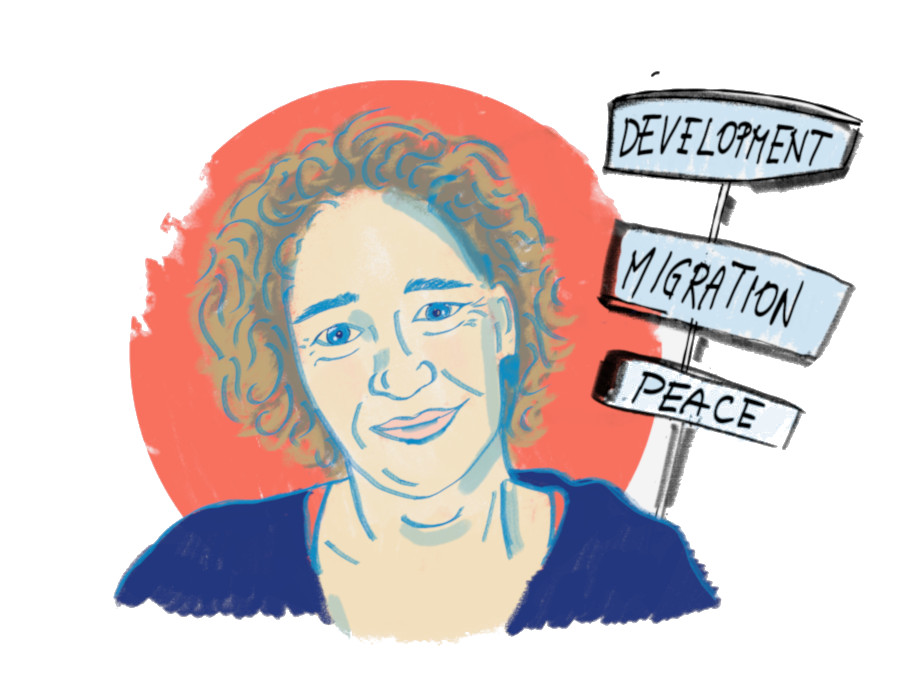
My name is Sonja Mitter. When I took up the role of creating and coordinating the SALTO South East Europe Resource Centre, I was young and passionate about the idea of supporting and facilitating cooperation between young people from different countries and thus contributing to strengthening intercultural understanding, peace and stability in Europe. I had come to Slovenia after six years of working as an educational advisor at the Council of Europe European Youth Centre in Strasbourg, where I had, among other things, carried out activities in Croatia and Bosnia and Herzegovina, but also in and with the countries of North Africa, the Middle East, for instance. I hold a M. A. in history with a focus on migration, and intercultural communication and cooperation are close to my heart.
Today, I am still convinced that the European youth programmes – Erasmus+ and the European Solidarity Corps – have a great potential to empower young people, strengthen their active civic engagement, and open their minds through meeting and learning from young people from other parts of Europe. The programmes are also a great tool for building the competences and capacities of youth work professionals, for organisations, and for the further development of Europe.